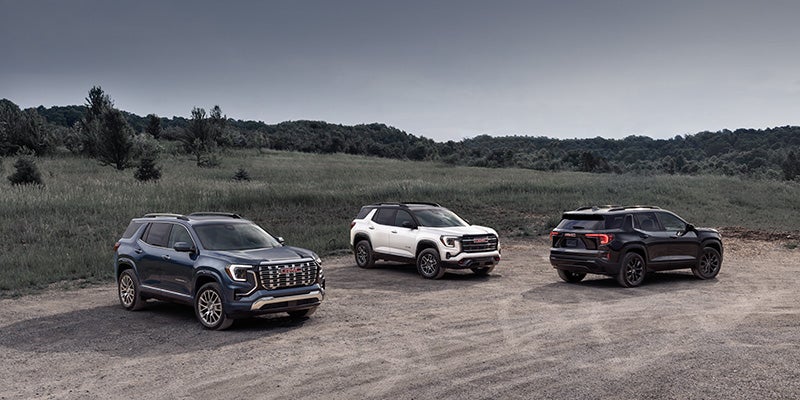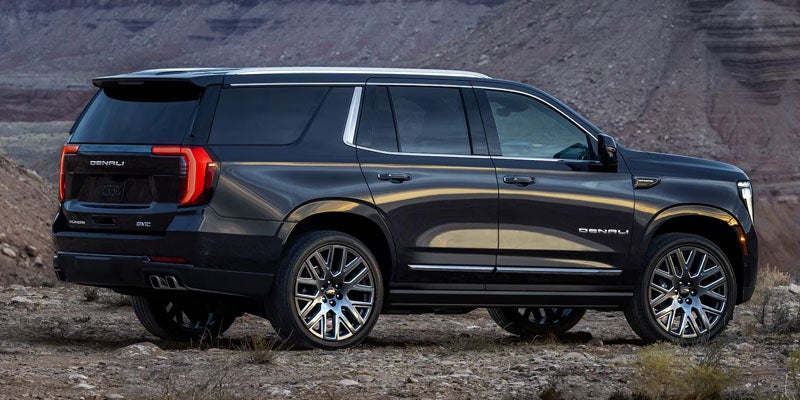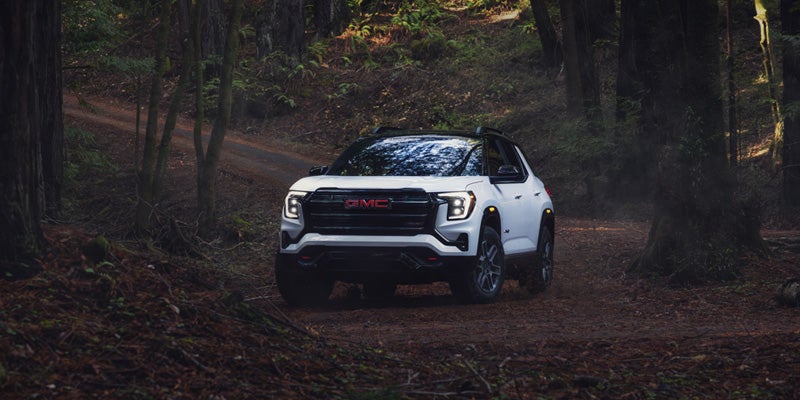



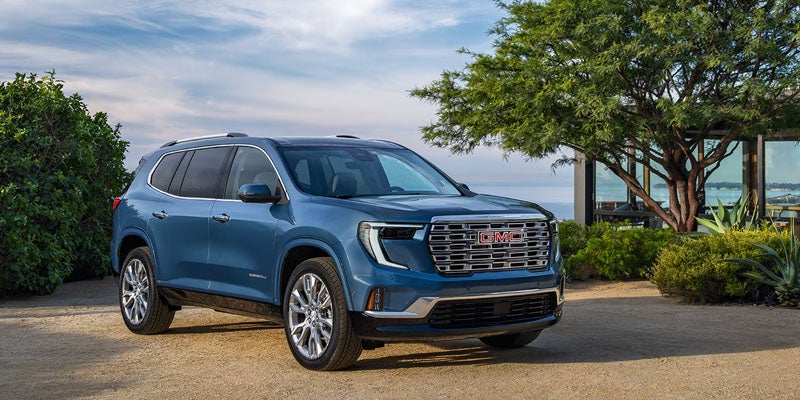
The useful thing about a trim lineup is that it should offer more than different wheels and increasingly long equipment lists. Each version should make sense for a particular kind of owner. The 2026 GMC Acadia manages that rather well. For families around Karnes City, understanding the differences is the quickest way to find the right Acadia. Elevation: Start With the Useful Stuff Elevation may open the Acadia lineup, but the mechanical specification is already substantial. A 2.5L Turbocharged engine produces 328 hp and 326 lbs. ft. of torque and works with an 8-speed automatic transmission. Inside, there's a 15-inch diagonal Premium GMC Infotainment System with Google built-in compatibility and a Bose® 12-speaker premium audio system. Elevation also provides more than 19 standard safety and driver-assistance technologies. Perhaps its most useful distinction is seating. Elevation can accommodate up to 8 passengers, making it the Acadia to examine closely if maximizing passenger capacity is high on your list. AT4: The Acadia That Prefers Dirt on Its Tires AT4 changes the Acadia's priorities. Its Active Torque Control AWD system is accompanied by an off-road-tuned suspension and increased ride height. Steel skid plates provide additional protection beneath the vehicle, while red recovery hooks make the intention reasonably clear from the front. The 18-inch dark machined aluminum wheels are fitted with all-terrain tires, another functional change rather than simply an exercise in appearance. GMC carries that identity into the cabin with a Forest Storm interior featuring Mahogany accents and AT4 stitching on the front head restraints. If your idea of SUV capability extends beyond navigating a wet parking lot, AT4 is the obvious place to start comparing. Denali: More Comfort Without Losing the Utility Denali takes a different route. Leather-appointed heated and ventilated front seats move comfort forward, while the second row receives leather-appointed seating as well. A configurable 8-inch diagonal Head-Up Display projects useful information into the driver's field of view. The exterior gets the familiar Denali treatment through its unique grille, Galvano Silver accents, and 20-inch machined aluminum wheels with a Pearl Nickel finish. More important for everyday use are the seating features. Second-row one-touch folding seats help with access and reconfiguration, while the third row can be power-folded when additional cargo room is required. Denali accommodates up to 7 passengers and can be configured with FWD or AWD. It's the version for someone who still needs an Acadia to behave like a family SUV but would prefer it to feel considerably less utilitarian while doing so. Denali Ultimate: Where GMC Stops Holding Back The Denali Ultimate takes the luxury brief farther. Super Cruise® hands-free driver assistance technology is standard and can operate on more than 600,000 miles of compatible roads. A 3-year OnStar® One plan is also included. The Woodland Mahogany interior brings full-leather front seats with heating, ventilation, massage functionality, and plaited contrast stitching. A Bose® 16-speaker Performance Series audio system and panoramic sunroof continue the theme. Outside, Vader Chrome finishes the grille and GMC emblems, distinguishing the Ultimate without requiring an enormous collection of additional badges. The result is still recognizably an Acadia, but one designed for buyers who place considerably more weight on cabin materials, comfort, and driver-assistance technology. The Useful Numbers Don’t Depend on the Badge Some of the Acadia's most important capabilities aren't reserved for a particular trim. With the Trailering Package, every 2026 Acadia trim can tow up to 5,000 lbs. when properly equipped. Maximum cargo capacity reaches 97.5 cu. ft. behind the first row with the second and third rows folded. The standard safety equipment is extensive as well. It includes Enhanced Automatic Emergency Braking, Forward Collision Alert, Blind Zone Steering Assist, Adaptive Cruise Control, Lane Keep Assist with Lane Departure Warning, and Rear Cross Traffic Braking among other technologies. Pick the Acadia Around How You’ll Use It Price GMC in Karnes City can help you compare the current Acadia inventory and see those differences in person. Look at seating configuration, drivetrain, cargo needs, and the equipment you'll use regularly before deciding how far up the lineup to go. Once you've found the version that suits your routine, schedule your GMC Acadia test drive online. The best trim isn't necessarily the one with the most equipment. It's the one whose equipment you won't want to be without.
The 2026 GMC Truck Lineup: Five Models, Five Very Different Jobs
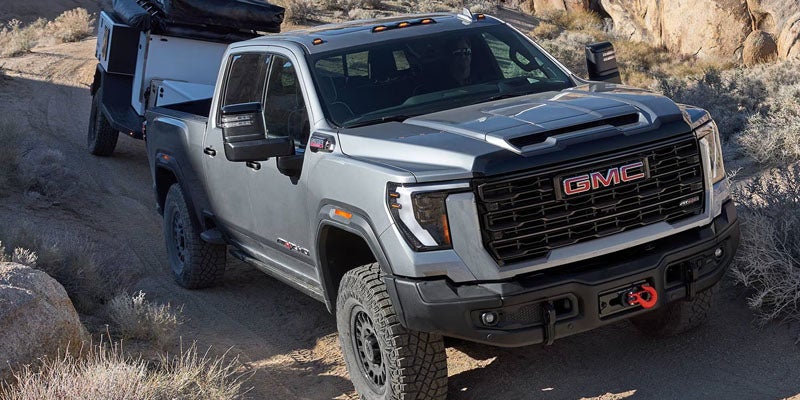
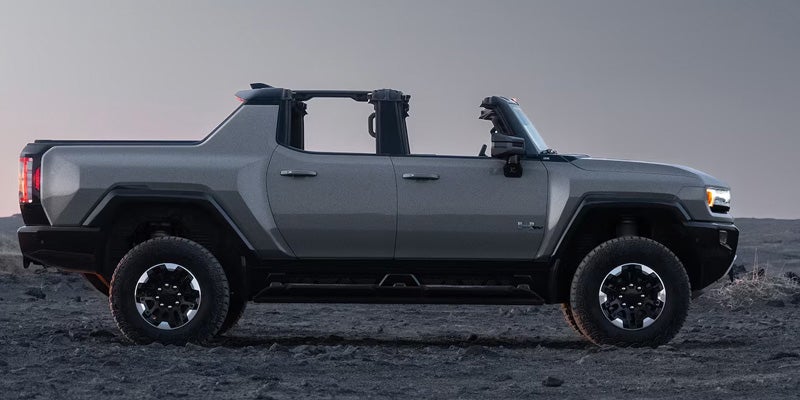
Calling something a pickup truck doesn't tell you terribly much anymore. A truck might be a manageable midsize machine, a serious towing tool, a 1,160 hp electric performance vehicle, or something somewhere between all 3. The 2026 GMC truck lineup demonstrates the point rather neatly. It stretches from the Canyon through the Sierra 1500 and Sierra HD range to the electric Sierra EV and HUMMER EV Pickup. For truck buyers around Karnes City, Texas, choosing among them becomes considerably easier once you start with the job rather than the badge. Canyon: Enough Truck Without the Extra Bulk The 2026 GMC Canyon is the midsize member of the family and arguably the most straightforward choice for someone who wants useful capability in a more manageable package. Its TurboMax™ 2.7L 4-cylinder produces 310 hp and 430 lbs. ft. of torque, which GMC identifies as best-in-class standard gas engine torque. Maximum towing capacity reaches 7,700 lbs. when properly equipped. Elevation, AT4, AT4X, and Denali trims give the Canyon distinctly different characters, from straightforward road use to more serious off-road equipment and premium appointments. Available technology includes an 11.3-inch diagonal center touchscreen, 11.0-inch diagonal Driver Information Center, HD Rear Vision Camera with Hitch View, and ProGrade™ Trailering System. You aren't giving up modern truck technology simply because you've chosen the smaller GMC. Sierra 1500: Popular for a Reason Move to the 2026 Sierra 1500 and the number of possibilities expands considerably. The standard TurboMax™ produces 310 hp and 430 lbs. ft. of torque. Available engines include a 5.3L V8, a 6.2L V8 producing up to 420 hp and 460 lbs. ft. of torque, and a 3.0L Duramax® Turbo-Diesel delivering up to 305 hp and 495 lbs. ft. of torque. Maximum towing reaches 13,300 lbs. when properly equipped. The Sierra 1500 is offered in Pro, SLE, Elevation, SLT, AT4, AT4X, Denali, and Denali Ultimate trims. That breadth is its strength. A work-focused Sierra and a Denali Ultimate may share a name, but they're answering quite different briefs. Available Super Cruise® hands-free driver assistance technology, a 13.4-inch diagonal Premium GMC Infotainment System with Google built-in compatibility, and the 6-function MultiPro™ Tailgate extend that versatility. Sierra HD: When the Trailer Decides the Truck There comes a point when choosing a truck isn't primarily about preference. The load makes the decision for you. That's where the Sierra 2500 HD and Sierra 3500 HD enter the conversation. Both offer a 6.6L V8 gas engine, while the available 6.6L Duramax® Turbo-Diesel V8 produces 470 hp and a substantial 975 lbs. ft. of torque. Properly equipped, the Sierra 2500 HD can tow up to 22,390 lbs. The Sierra 3500 HD raises maximum towing capacity to 36,000 lbs. Technology becomes particularly useful at this scale. The available ProGrade™ Trailering System and up to 14 available camera views can assist with hitching and trailer awareness, while available Transparent Trailer View provides another perspective when towing. The HD lineup spans Pro through Denali Ultimate, with AT4 and AT4X configurations available for drivers whose heavy-duty work doesn't remain on pavement. Sierra EV: Electric Doesn’t Mean Light Duty The 2026 GMC Sierra EV approaches truck capability from a completely different direction. Depending on configuration, it offers up to 478 miles of GM-estimated range, up to 760 hp, and up to 785 lbs. ft. of torque. Maximum available towing reaches 12,500 lbs. Those are serious truck numbers before considering what electric architecture allows GMC to do differently. Available 4-Wheel Steer with CrabWalk can change how this large pickup maneuvers, while the MultiPro™ Midgate can alter the relationship between cabin and bed space. Available Super Cruise® adds hands-free driver assistance technology for compatible roads. The Sierra EV isn't simply an electric version of the Sierra 1500. Its packaging and technology give it a character of its own. HUMMER EV Pickup: Because 1,160 hp Exists The 2026 GMC HUMMER EV Pickup occupies the more extravagant end of GMC's electric range. Output reaches up to 1,160 hp, while GM-estimated range reaches up to 363 miles. Available Watts to Freedom can enable an approximately 2.8-second 0–60 mph run. In a pickup. Off-road technology is equally distinctive. Available 4-Wheel Steer with CrabWalk allows diagonal movement in certain low-speed situations, while the Infinity Roof and available transparent removable Sky Panels create a more open-air experience. It's less a conventional answer to the pickup question and more a demonstration of what an electric off-road truck can become when engineering is given considerable freedom. Choose the Job, Then Choose the GMC Price GMC in Karnes City can help you compare the current GMC truck lineup, explore available configurations, and match towing, hauling, off-road, or electric requirements to the appropriate model. Once you've narrowed the field, schedule your GMC truck test drive online. Start with what you need the truck to do. The right size tends to reveal itself from there.